
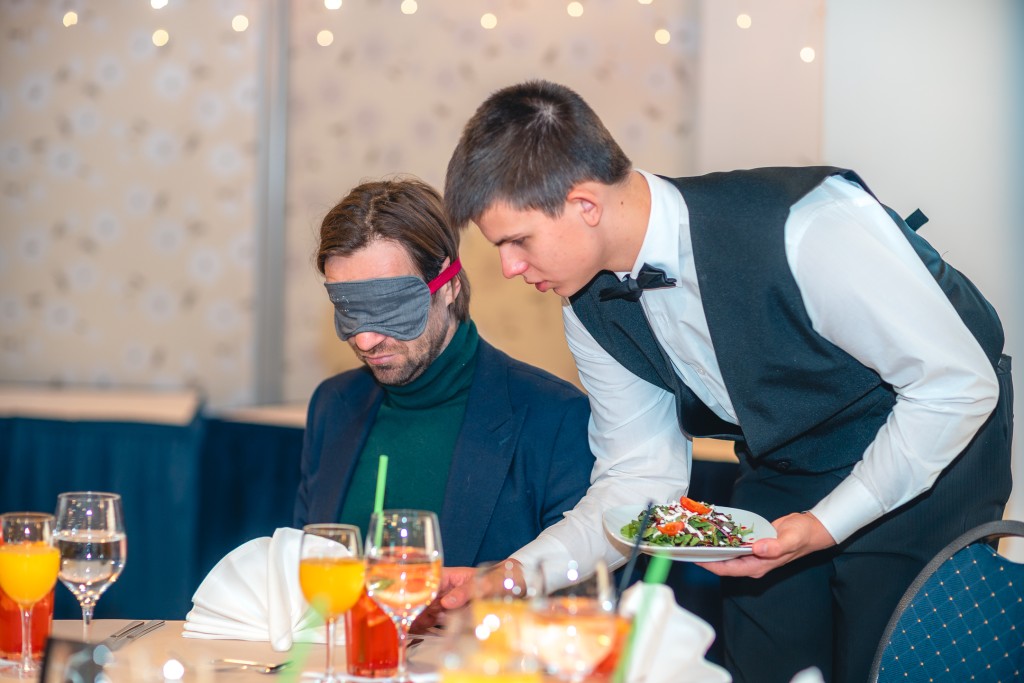
On 25 November 2025, partners and stakeholders of the Interreg VI-A Estonia–Latvia project Access Routes will gather in Vidzeme, Latvia, for an event titled “A Lunch of Senses – Experiencing Inclusion Across Borders.” The event will bring together project partners, accessibility experts from both countries, representatives of the European Commission and the Interreg Estonia–Latvia Programme to highlight how the project activities are helping to improve accessibility in nature and cultural tourism.
The day will begin with a site visit to Lielezers beach in Limbaži, where participants will see how the project has improved the accessibility of the area, making it more usable for people with disabilities, seniors and families. This will be followed by a meeting hosted by Limbaži municipality, where project partners will present progress, results and next steps in developing accessible tourism routes across Estonia and Latvia.
One of the central parts of the programme will be the Lunch of Senses, an interactive and educational experience where participants briefly encounter everyday challenges related to limited accessibility. During the lunch, guests will experience limited vision, hearing or mobility while dining, helping them understand how routine moments—such as going to a café and reading a menu, navigating the room or communicating—can turn into obstacles when accessibility is lacking.
European Commission highlights the importance of accessibility:
The European Union remains steadfast in its commitment to promoting accessibility and inclusion in the context of cross-border cooperation, recognizing the transformative power of tourism and culture in fostering a more united and prosperous Europe. Through the Cohesion Policy, the EU continues to invest in initiatives that enhance the accessibility of cultural and tourist attractions, support the development of inclusive and sustainable tourism products, and facilitate cooperation among Member States to promote their rich cultural heritage and unique tourist offerings. By doing so, the EU aims to unlock the full potential of the tourism and culture sectors, creating jobs, stimulating local economies, and showcasing the diversity and richness of European culture to the world, while ensuring that everyone, regardless of their background or abilities, can participate and benefit from these opportunities.
Following the lunch, the event will conclude with a wrap-up session, during which participants will share their impressions and reflections from the experience. The discussion will show why empathy, universal design and cross-sector cooperation are vital for improving accessibility not only in Estonia and Latvia, but throughout the EU and worldwide. It will also highlight that the European Union actively supports such initiatives, recognising accessibility and social inclusion as essential elements of Cohesion Policy. Projects like Access Routes provide the knowledge, tools and examples that help regions take meaningful steps toward more inclusive environments.
Alise Luse, Project Manager at Kurzeme Planning Region, notes:
"Accessibility work only becomes real when people experience it themselves. Through this event we want to make accessibility visible and understandable, while also celebrating how much can be achieved when regions and organisations work together across borders."
Anu-Maaja Pallok, Head of the Managing Authority and Joint Secretariat of the Estonia–Latvia Programme, adds that accessibility is highly important not only at national level, but also across the Estonia–Latvia border regions and in cross-border cooperation more broadly.
"Our programme has supported tourism development over several funding periods, and experience shows that promoting accessible solutions contributes to the competitiveness of regions as well as to the development of local jobs and services. It is crucial that the European Union supports such initiatives, because this is what enables real changes that improve people’s everyday lives at the grassroots level. The Estonia–Latvia Programme will continue in the future, and we hope to keep supporting similar joint investments and initiatives that, through cross-border cooperation, help create environments where every person is recognised and can move and participate on equal terms. Such initiatives benefit residents, communities and visitors alike, and strengthen cross-border cohesion throughout the programme area,” Pallok explained.
The event and the project “Access Routes – Development of Accessible Tourism Routes” (EE-LV00043) are co-funded by the Interreg VI-A Estonia–Latvia Programme.

-
About the project
Access Routes – Development of Accessible Tourism Routes (EE-LV00043) expands the joint tourism platform Mapeirons.eu by creating a network of accessible one- to three-day tourism routes across Estonia and Latvia. The project improves nature and cultural heritage sites, identifies accessibility gaps, tests new tactile and sensory solutions and introduces the Accessibility label Mapeirons. The total budget of the project is 1,122.217,50 EUR, of which ERDF co-financing is 897,774,00 EUR. The project runs from 1 October 2023 to 31 March 2026 and supports the development of accessible tourism routes and services across Estonia and Latvia.
-
About the Interreg Estonia–Latvia Programme
The Interreg VI-A Estonia–Latvia Programme 2021–2027 supports cooperation projects that strengthen connections between people, communities and regions. The Programme is co-financed by the European Union from the European Regional Development Fund (ERDF).
-
For more information:
www.mapeirons.eu
Access Routes | ESTLAT
Contact:
Alise Luse, Project Manager
Kurzeme Planning Region
Email: [email protected]
Tel: +371 265 678 74
Katrin Juhanson, Communication Manager
Estonia–Latvia Programme
Email: [email protected]
Tel: +372 50 555 27

