

The project “Local Tastes” was co-funded by the Interreg VI-A Estonia–Latvia Programme (ERDF)
- Project name: Local Tastes (Project No. EE-LV00071)
- Project partnership: Võrumaa Farmers Union (Võrumaa Talupidajate Liit MTÜ); Latvian Rural Advisory and Training Centre, Ltd (SIA "Latvijas Lauku konsultāciju un izglītības centrs")
- Duration: 13.11.2023 – 12.02.2025
- Total budget: 87,499.50 EUR
- ERDF contribution: 69,999.60 EUR
- Priority 1. More cooperating cross border regions and development of joint services
A New Definition of "Local"
The main objective of the Local Tastes project was to strengthen cooperation between small food producers from Estonia Vana-Võromaa region: Põlvamaa, Võrumaa, Valgamaa; from Latvia: Valmiera, Valka, Smiltene counties. Rather than defining “local” based on national borders, the project promoted a more practical definition: local production is determined by proximity and relevance to consumers.
“Local does not mean Estonian or Latvian - it means produced close to the people who buy it. In border regions, local can include both sides.”
To implement this approach, two established organisations collaborated. Võrumaa Farmers Union (UMA MEKK), the lead partner from Estonia, contributed a network of more than 75 producers built over 14 years. From Latvia, the Latvian Rural Advisory and Training Centre (LLKC) contributed its national infrastructure and the Novada Garša (“Taste of the Region”) platform, which includes more than 950 enterprises. Together, they created suitable conditions for cross-border cooperation.
Results: New Contacts and Business Growth
The most notable outcomes came from practical examples of cooperation between producers:
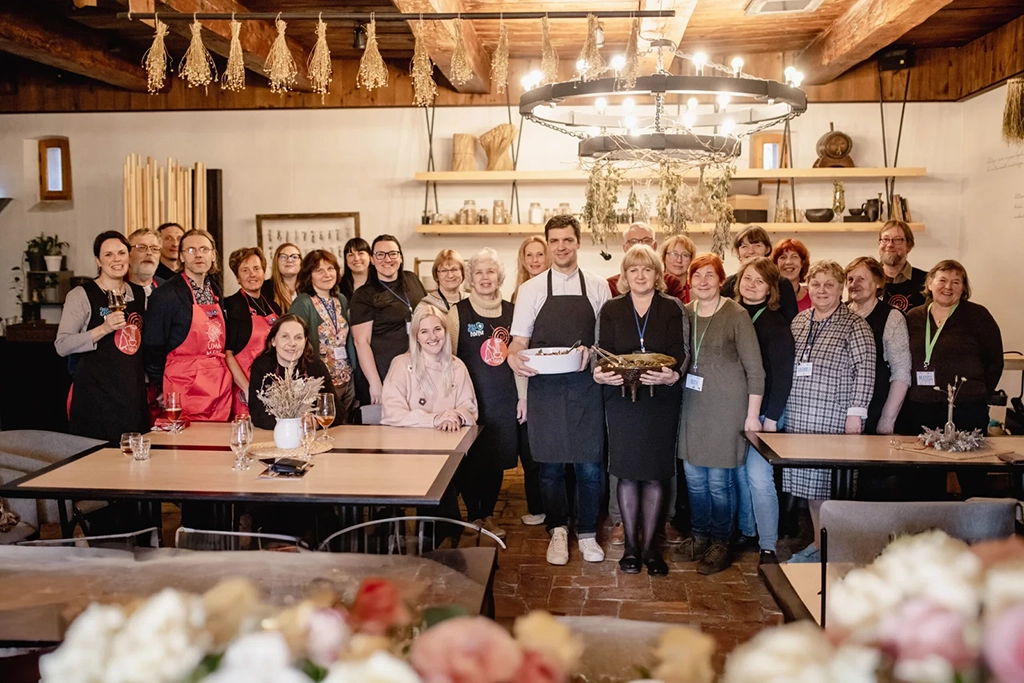
- During a visit to Latvian producer LAUX, Estonian participants gained ideas for new services. This led to Uue-Saaluse Veinitalu hosting waffle dinners, and Kalda Loodustalu beginning renovation of their barn to create a commercial space.
- Collaboration developed in both directions. LAUX hosted a guest dinner at Tillu Café in Estonia for Valentine’s Day. There was a whole section of Latvian products in Tillu café during Christmas and after that as well.
- Following a cooking class in Latvia, Estonian cafés introduced traditional soda bread to their menus.
- Producers across the border of similar products, such as quail eggs, began exchanging technical knowledge and continued to support one another at local fairs.
These examples indicate that cooperation led to increased business opportunities, knowledge transfer, and peer support between producers.

Ensuring Long-Term Continuity
To maintain the network beyond the project’s 15-month duration, the partners agreed on three key measures:
-
Digital communication channels
A shared Facebook group and WhatsApp chat enable ongoing exchange of information, contacts. After the project, several exchanges continue when producers are looking for specific raw material across borders. -
Institutional support
Both UMA MEKK and LLKC (via the Novada Garša initiative) have committed to supporting the cross-border network and involving producers in future events. -
Future project planning
The organisations intend to sign a cooperation agreement in the beginning of 2026 when a joint study trip will be organised to Peipsi Sibulatee in Estonia. Furthermore a new project has been submitted to the Central Baltic Programme to continue building on the existing network.
These actions aim to ensure that collaboration continues beyond the project’s formal end.

