
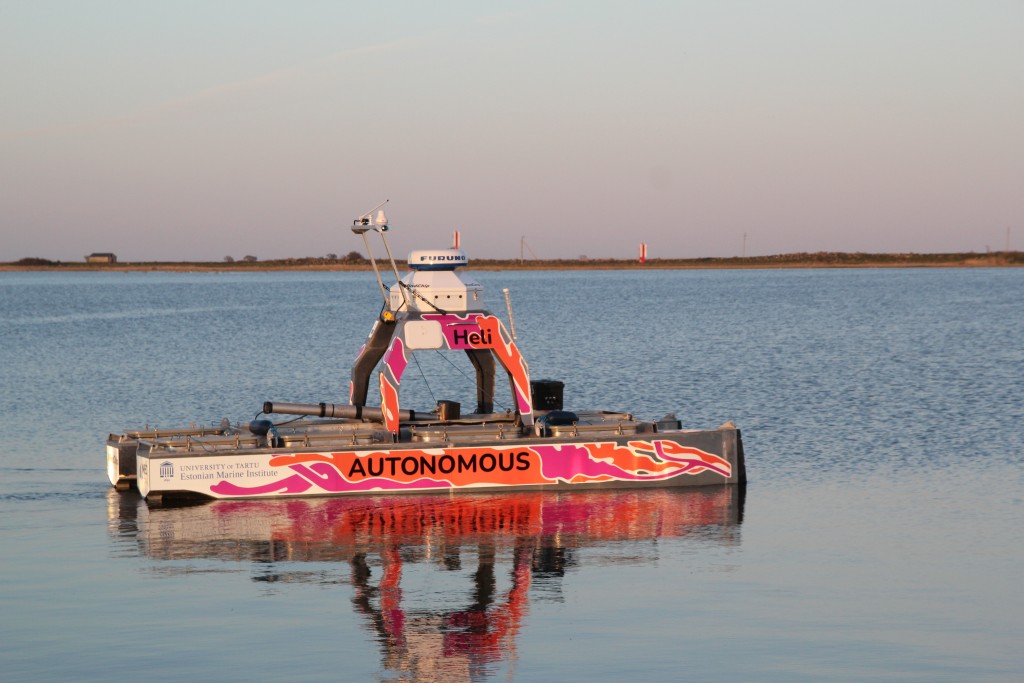
New technologies such as automation and artificial intelligence are increasingly being used in marine research, supporting more efficient and environmentally friendly ways to study the sea. In Estonia, researchers studying Baltic Sea fish stocks are using a semi-autonomous unmanned research vessel to improve fisheries monitoring and data collection.
The unmanned vessel, named Heli, was developed by the University of Tartu’s Estonian Marine Institute in cooperation with technology companies OÜ Mindchip and OÜ MEC and was launched in 2023. The vessel is operated remotely from shore and was designed specifically to meet the needs of marine and fisheries researchers.
A scientific project testing and developing the vessel’s applications is funded by the Estonia–Latvia cross-border cooperation programme (Interreg) through the AUTOFISH project. AUTOFISH focuses on developing innovative and cost-effective methods for joint fisheries monitoring and management in the Gulf of Riga, including the use of unmanned surface vessels and new technologies. The project strengthens cross-border cooperation between Estonian and Latvian researchers and supports more sustainable use of shared marine resources.
The vessel uses sonar and onboard sensors to find where fish are in the sea, estimate the size and location of fish groups, and send this information back to scientists on shore. This data helps researchers monitor fish stocks and supports fisheries management decisions, such as setting fishing quotas. Compared to traditional crewed research vessels, the unmanned vessel allows surveys to be carried out with lower fuel consumption, reduced costs, and a smaller environmental footprint.
Heli follows pre-programmed routes using AI-supported navigation, while a trained operator monitors the vessel and makes final decisions from land. The vessel is equipped with cameras, radar, an automatic identification system, and satellite communication, enabling continuous monitoring of both the vessel and its surroundings. The introduction of satellite connectivity has significantly improved data transmission and reliability at sea.
The development and testing of the vessel also highlight regulatory and safety considerations. As autonomous maritime vessels are not yet fully covered by existing legislation, the Estonian Transport Administration has issued a special permit allowing the vessel to operate in designated research areas under defined safety and responsibility arrangements. International work on regulations for maritime autonomous surface ships is ongoing.
Through the AUTOFISH project, the use of autonomous and remotely operated vessels such as Heli demonstrates how cross-border cooperation and technological innovation can support more efficient fisheries monitoring, improved scientific knowledge, and sustainable management of fish stocks in the Baltic Sea.
***

