

The project “Active Sustainability” is co-funded by the Interreg VI-A Estonia–Latvia Programme (ERDF)
- Project name: Active Sustainability (Project No. EE-LV00157)
- Project partnership: Saaremaa Sailing Academy MTÜ, Kuiviži Yacht Club
- Duration: 01.06.2025 – 31.05.2026
- Total budget: 82 577.50 EUR
- ERDF contribution: 66 062.00 EUR
- Priority 1. More cooperating cross border regions and development of joint services
Active Sustainability is a cross-border cooperation project aimed at strengthening communication between young sailors from Estonia and Latvia while increasing their environmental awareness. Through practical joint activities, young participants gain a deeper understanding of the state of the Baltic Sea and develop cooperation skills focused on environmental protection.
The first project activity took place at Sõrve Peninsula, where 30 young people (15 from Estonia and 15 from Latvia) participated in a marine litter clean-up. Together they collected plastic waste, ropes, old fishing nets, and other debris washed ashore or left behind by human activity. After the clean-up, the collected waste was analysed together with Ivar Ansper, discussing the types and origins of litter and ways to prevent such pollution in the future. The day was not only a physical activity but also an important learning experience that strengthened environmental awareness and cross-border communication. The participants were welcomed by Saaremaa municipality’s Deputy Mayor Liis Lepik, and English was used as the working language, encouraging international interaction and new friendships.
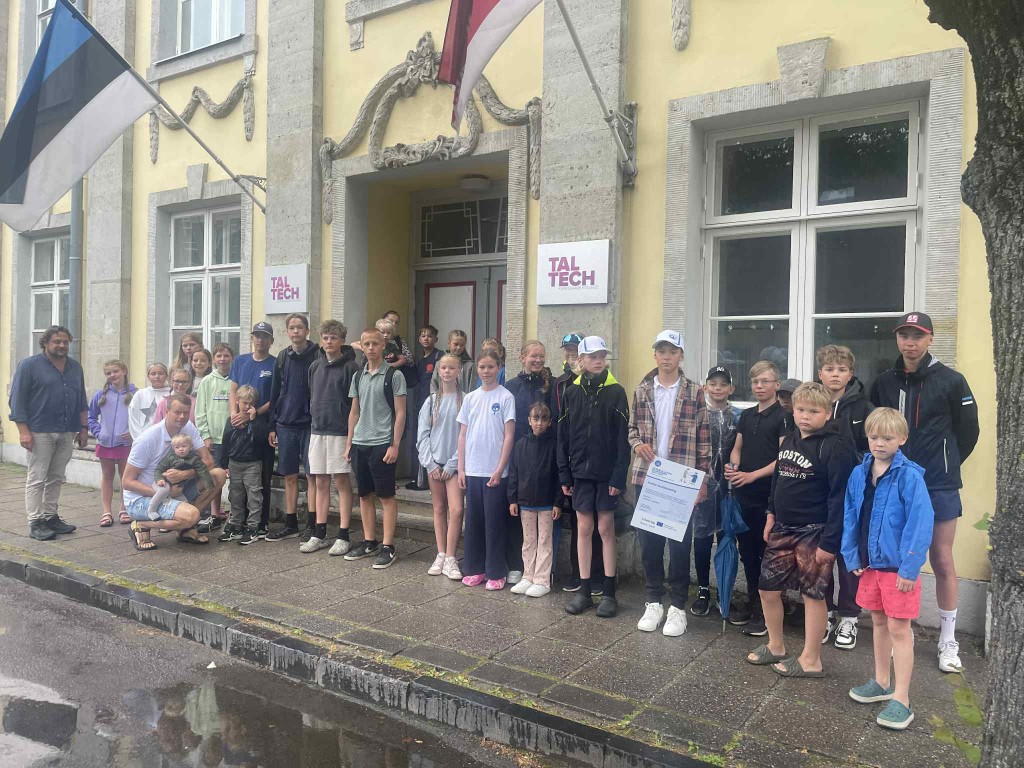
The cooperation continued in July with a two-day international youth science seminar and workshop held on Saaremaa on 29–30 July 2025, again bringing together 30 young people from Saaremaa and Salacgrīva. The seminar focused on hands-on environmental monitoring, water quality assessment, and nature protection. Under the guidance of TalTech, participants learned about marine water monitoring and wave modelling and carried out practical water sampling at three locations: Soobiku hiking trail water body, Odalätsi spring, and Kõiguste harbour. On site, water pH, turbidity, microplastics, and aquatic life were analysed, and results were discussed in working groups using a science-based approach.
The programme also included educational visits to the Estonian Marine Institute’s Kõiguste field station, where researchers introduced long-term marine ecosystem monitoring and the impacts of climate change and human activity on the Baltic Sea. At Kudjape Waste Centre, participants learned about waste sorting, recycling systems, and how land-based waste, including microplastics, affects marine environments. The seminar concluded with a creative workshop at Pidula Wakepark, where young people discussed environmentally friendly habits and a science-based worldview. As a result of group work, participants created infographics and short videos to share environmental messages with their peers.
Both events emphasized practical learning, teamwork, and cross-border cooperation, reinforcing the role of young people in environmental protection and sustainable thinking. The next project activities will continue in Latvia, where cooperation between Estonian and Latvian youth will further develop in support of a cleaner Baltic Sea and a more sustainable future.

