

Green School Dining
Project No.
EE-LV00066
Priority 1. More cooperating cross border regions and development of joint services

Overview
Project partnership:
- NGO Setomaa Union (MTÜ Setomaa Liit)
- Rõuge Municipality Government (Rõuge vallavalitsus)
- Smiltene Municipality (Smiltenes novada pašvaldība)
- Tukums Municipality (Tukuma Novada Pašvaldiba)
Duration: 01.10.2023 – 30.09.2025
Total budget: 374,050.00 EUR
ERDF contribution: 299,240.00 EUR
Contact person:
Kaja Tullus, [email protected]

Project Objective and Activities
According to WHO statistics, around a quarter of schoolchildren aged 7–9 in Estonia and Latvia are overweight, and approximately 20% of teenagers aged 11–15 consider themselves overweight. There is a significant risk that health problems related to excess weight will worsen with age. Currently, only about 40% of children eat fresh fruit daily, and just 20% consume fresh vegetables.
Partners have decided that, to achieve substantial changes in the dietary habits of schoolchildren and increase the attractiveness of school dining, a comprehensive long-term strategy should be developed. This strategy must consider the expectations and needs of children, as well as the motivation and capacity of chefs, food producers, catering companies, school management, municipal specialists, and other key stakeholders.
Project Objective:
The project aims to improve public catering services in schools and kindergartens, with a specific focus on:
- Expanding the use of organic products.
- Encouraging healthier food choices.
- Increasing student involvement in school meals.
Expected Results:
- A common strategy and action plan will be developed by the rural municipalities of Setomaa, Rõuge, Smiltene, and Tukums to:
- Increase the use of organic products in school meals.
- Improve the overall quality of school dining by introducing the "school restaurant" concept.
- Establish cross-border cooperation to implement the best practices from both countries.
- Each region will set a quantitative target in the strategy, such as ensuring that 20–50% of school/kindergarten meals consist of organic products.
- Pilot activities will engage different target groups through:
- Cooking competitions to create healthy menus.
- Farm tours for younger children.
- Experience exchange visits.
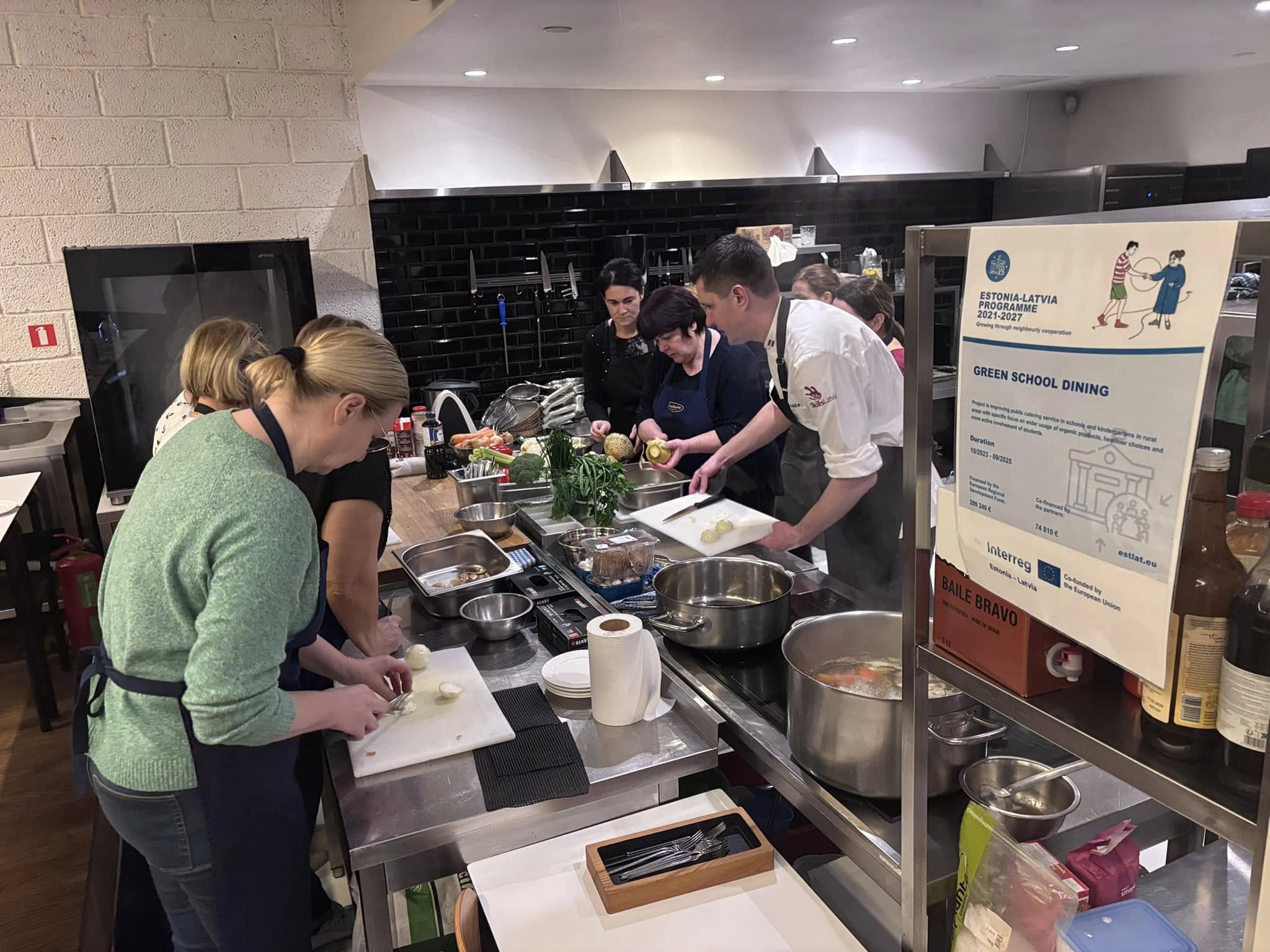
- Training sessions for chefs.
Links to partners' websites:
www.setomaa.ee
https://rouge.kovtp.ee/et/eesti-lati-piiriulese-programmi-projektid
https://www.tukums.lv/lv/projekts/interreg-projekts-green-school-dining
Loomise kuupäev: 19.03.2025
