

COREEL
Project No.
EE-LV00152
Priority 3. Sustainable and resilient programme area

Overview
Project partnership:
- Keep the Estonian Sea Tidy Association (Hoia Eesti Merd MTÜ)
- Kurzeme Planning Region (Kurzemes plānošanas reģions)
- Latvian Institute of Aquatic Ecology, agency of Daugavpils University
- Estonian Divers Association (Eesti Sukeldujate Klubi MTÜ)
Duration: 01.08.2024 – 30.11.2027
Total budget: 1,225,671.25 EUR
ERDF contribution: 980,537.00 EUR
Contact person: Marek Press,
[email protected]

Project Overview:
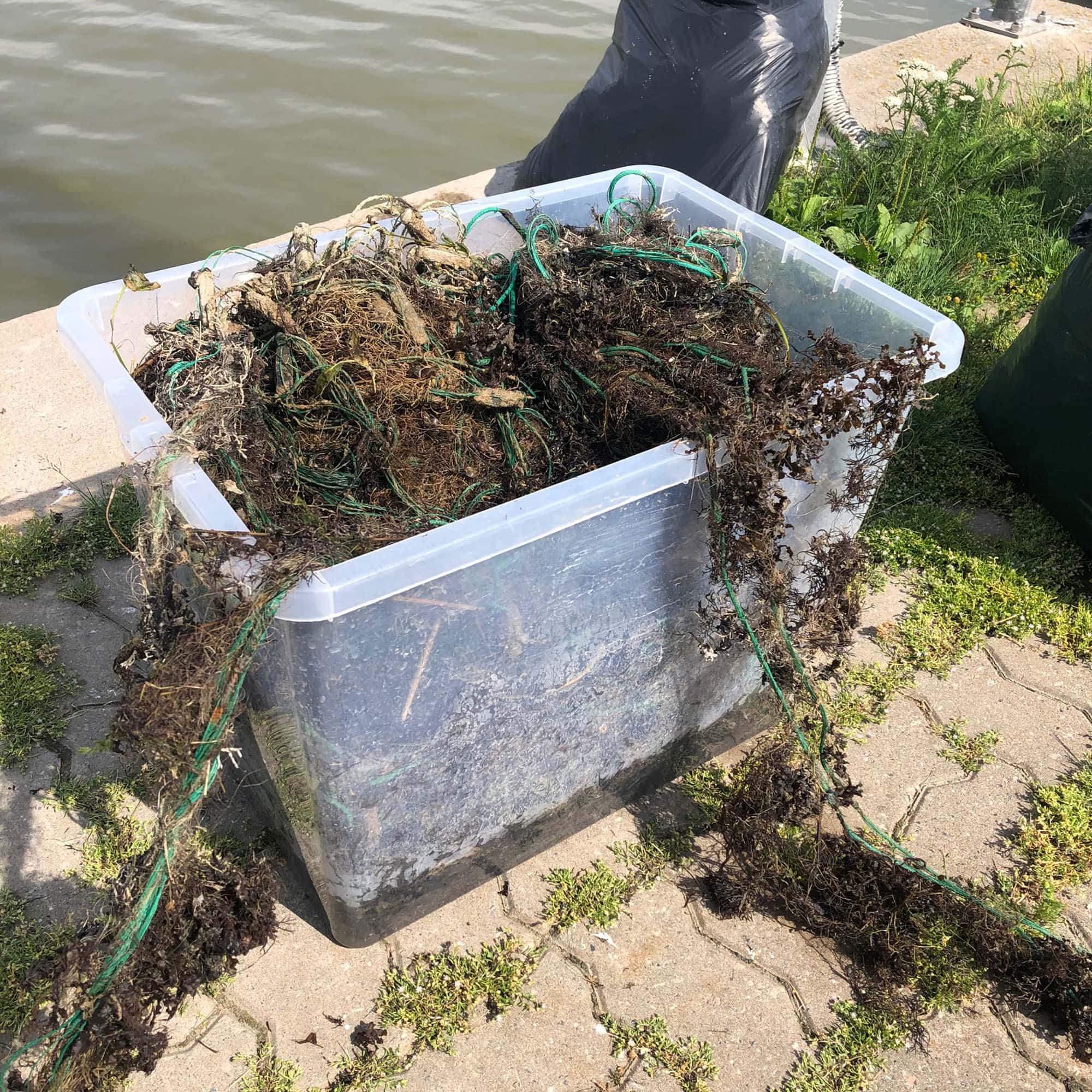
End-of-life (EOL) and derelict fishing gear (DFG) pose significant environmental, safety, and health risks in the Estonia-Latvia region. When not properly collected and recycled, fishing gear becomes marine and land litter, causes “ghost fishing,” endangers divers and vessels, and contributes to microplastic pollution and the release of hazardous substances. Despite EU and UN climate goals and upcoming Extended Producer Responsibility (EPR) systems, large quantities of accumulated fishing gear remain unmanaged and fall outside future collection schemes.
The COREEL project addresses these challenges through cross-border cooperation by improving the recovery of derelict fishing gear, establishing adequate and up-to-date collection facilities, and promoting responsible recycling practices. By applying new detection technologies, improving knowledge and infrastructure, and creating data-driven collection and recycling models, the project aims to improve the environmental status of EstLat border water bodies and support circular use of fishing gear materials.
Project Objective
- Improve the environmental status of Estonia-Latvia border water bodies through recovery of derelict fishing gear.
- Enable adequate and up-to-date collection facilities for end-of-life and derelict fishing gear in four locations.
- Promote responsible recycling of end-of-life fishing gear among fishers, port managers, gear suppliers, municipalities, and sectoral agencies.
Key Activities
- Establishment and improvement of collection facilities for EOL and derelict fishing gear in two locations in Latvia and two in Estonia.
- Training target groups in cleaning, sorting, and pre-processing of separately collected fishing gear in harbours.
- Identification of DFG hot spot areas and execution of DFG recovery operations.
- Application and testing of new sonar-based technology to detect and locate DFG over large water areas.
- Collection and analysis of high-quality data on quantities, composition, and origin of fishing gear.
- Development of a model for optimal collection and recycling of fishing gear in the region.
Expected Results:
- Improved reception facilities and increased capacity for EOL and DFG collection in the Estonia-Latvia region.
- Estonian and Latvian water areas cleared of derelict fishing gear.
- Map of DFG accumulation areas and improved knowledge base on gear pre-processing.
- A tested DFG detection and retrieval solution using a semi-submersible autonomous underwater vehicle integrated with 3D sonar.
- A practical guideline enabling replication of DFG search and recovery by target groups.
- Strengthened cross-border cooperation among environmental authorities, research institutions, and sectoral stakeholders.
- Increased interest and capacity of recycling companies to invest in recycling infrastructure for fishing gear.
Loomise kuupäev: 08.07.2025
