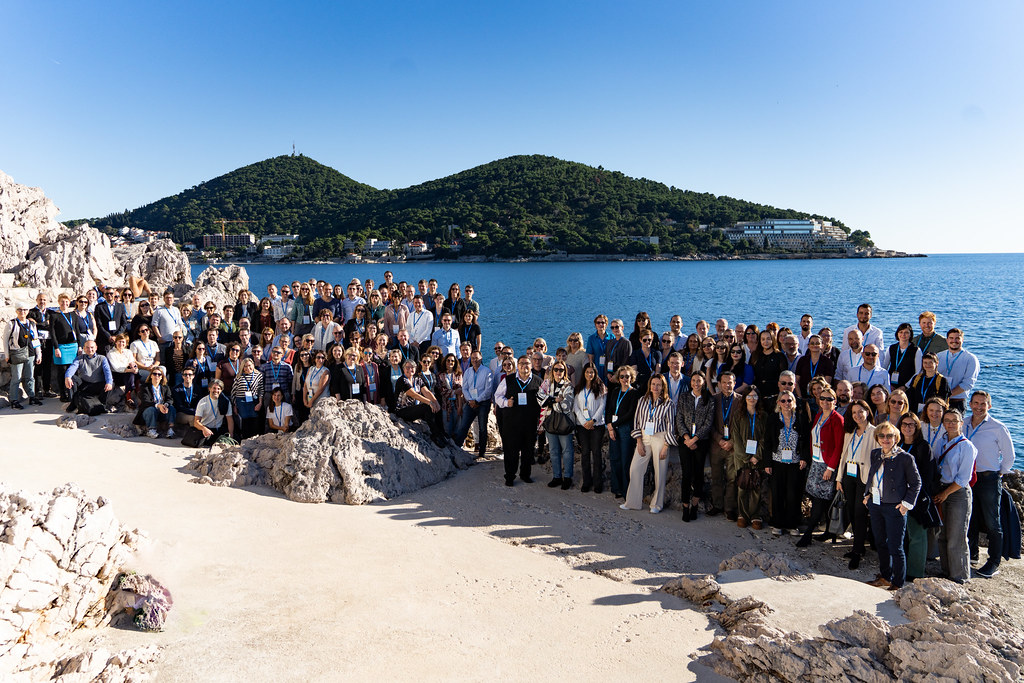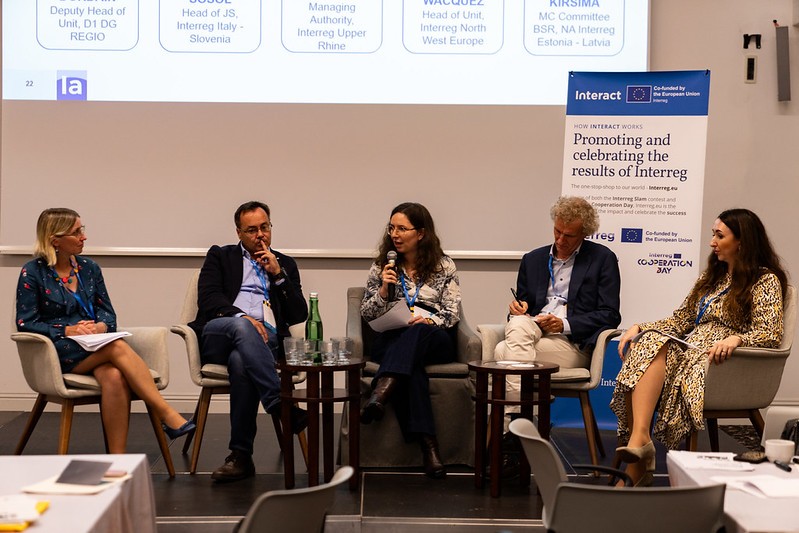
Our Estonia - Latvia Programme team – including representatives from the Managing Authority, National Authorities, and Joint Secretariat – joined the event to share experiences, exchange ideas, and contribute to shaping the 2028 - 2034 period.
Beyond the formal sessions, it was a chance to connect with colleagues from across Europe and to reflect together on how cooperation can continue to make a real difference for people and communities in our border region.
-
Learning, connecting, and contributing
"It was already my third Interreg Knowledge Fair, so I definitely didn’t want to miss this one,” says Inese Nikopensius, Programme Consultant at the Joint Secretariat. “The Fair is a great opportunity to hear the latest developments in the Interreg world and to share our programme’s perspective. This year’s focus on the post-2027 period gave us a lot of useful input for planning the next programming cycle."
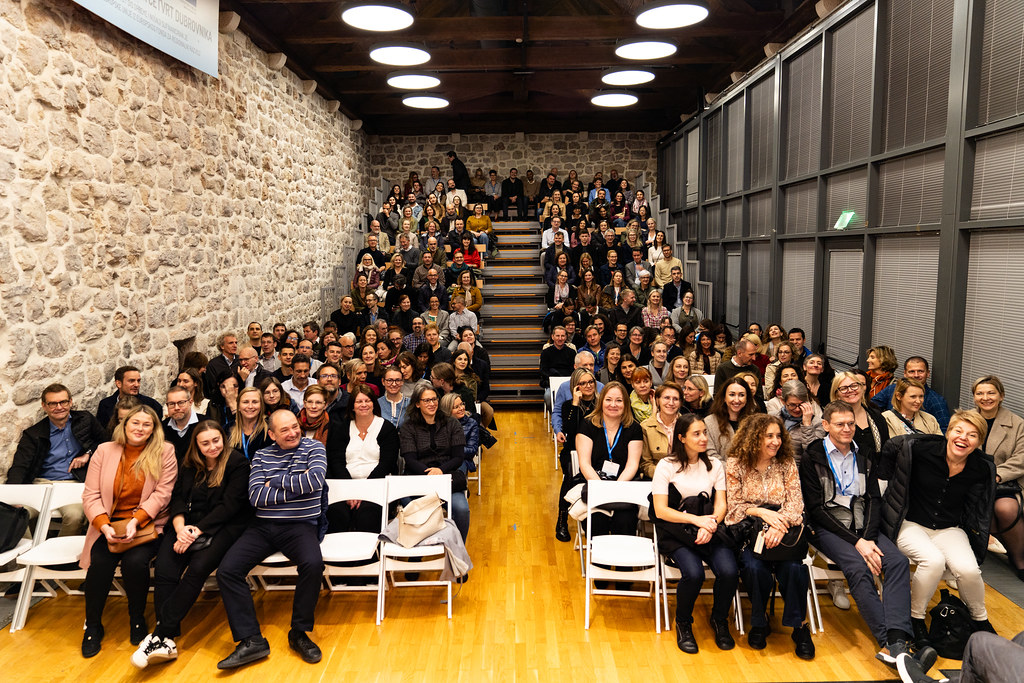
Inese highlights the Post-2027 Grand Tour, an open discussion session where participants worked in small groups to identify the key messages from the two days. “It was a dynamic and engaging way to collect our ideas, build on each other’s thoughts, and define what really matters for Interreg going forward,” she says. “It also helped our Estonia-Latvia team – MA, JS, and NAs – align our understanding and prepare for the processes ahead.”
-
Understanding the new direction
For Külli Kaare, Programme Expert at the Managing Authority, the most valuable part of the Fair was the discussion on performance-based approaches and future data requirements.
"This shift will affect how we work throughout the whole programme cycle – from programming to reporting,” she explains. “It was very useful to exchange views on how to make these changes meaningful and workable in practice. We also talked about what from the current period should be kept – because there’s a lot that works well in Interreg."
Külli adds that the event reinforced the need to base future programming on evidence and data: “We must look closely at what has worked so far and what communities in the Estonia-Latvia border area really need. This is how we’ll make sure the next period brings tangible results.”
-
Sharing national perspectives
From the National Authority side, Julia Kirsima from the Ministry of Regional Affairs and Agriculture valued both the peer learning and the chance to contribute as a speaker:
"I joined the Fair to exchange experiences on programme management and to learn from colleagues in other regions. In the panel discussion on Programming Post-27, we reflected on what has worked well in our current period and heard about good practices from others."
Julia especially appreciated the seminar on the performance-based approach: “It offered concrete examples of how to set measurable targets and very practical insights we can use when preparing for the upcoming programme period.”
Her colleague Margarita Golovko adds a policy perspective:
"As a Member State representative, I wanted to discuss the new legislative package with the European Commission and programme colleagues. The level of preparation by Interact and the clarity of their presentations were impressive. It was a great starting point for the next discussions on how future cooperation programmes can even better address the real needs of our border regions."
-
Gaining clarity for the next steps
For Anu-Maaja Pallok, Head of the Managing Authority and Joint Secretariat, the Fair offered timely clarity at a moment of change.
"We are all entering a new phase, so it was very useful to look at what is clear, what is still open and what the post-2027 documents don’t yet cover,” she says. “It was also encouraging to hear the Commission underline the strengths Interreg has built over the years.
She adds that the discussions helped set the direction for the work ahead:
“Understanding the broader context, combined with the support of Interact and our strong partnerships, gives us confidence to plan the next period and to focus even more on the results we want to achieve.”
-
Looking ahead
Returning from Dubrovnik, the team shares a common view: the Fair was more than a technical conference – it was a reminder of what makes Interreg special.
Working together across institutions and borders, listening to different experiences, and staying open to new ideas will be essential as preparations for Estonia - Latvia Programme 2028 - 2034 move forward.
"The lessons and contacts from the Knowledge Fair will help us shape clearer and more efficient support for beneficiaries,” says Inese. “Ultimately, that means stronger projects and more visible results for the people and communities in our shared region.
-
About the event
The Interreg Knowledge Fair 2025 in Dubrovnik focused on the upcoming EU funding period and the future of cross-border cooperation. The agenda included plenary debates and parallel sessions on programme design, performance-based management, visibility, resilience, and security. The Fair concluded with an open “Post-2027 Grand Tour” discussion and a final plenary on “Taking stock and what next?”.
By contributing to these discussions, our programme helped shape the preparation of the next generation of Interreg programmes.