
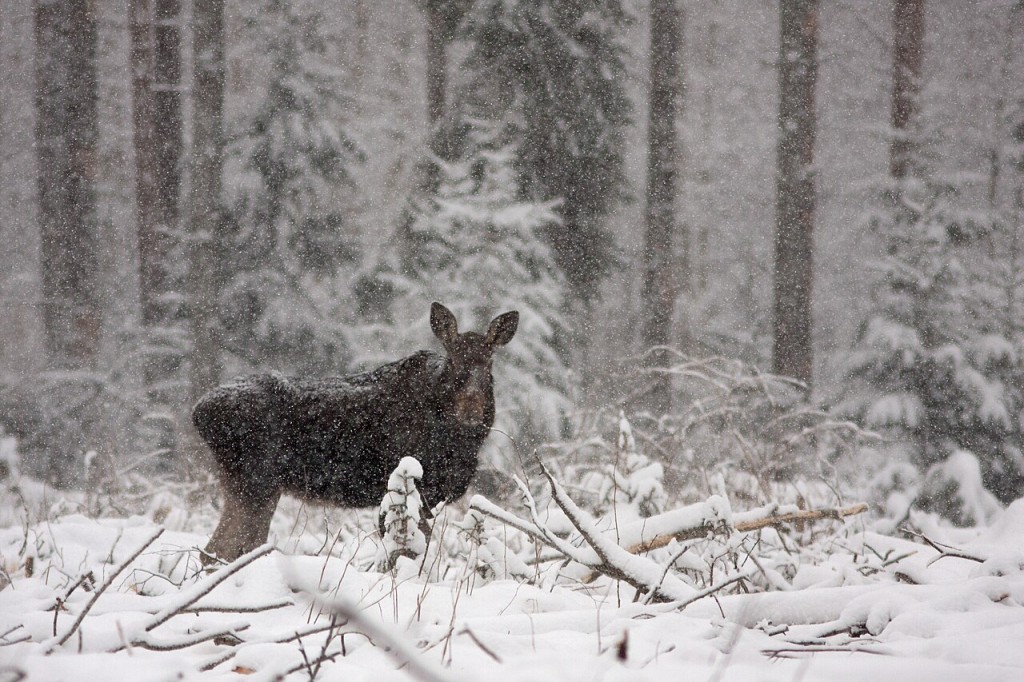
MooseBelt brings together hunting organisations, researchers, and public institutions from Estonia and Latvia. Hunters play a central role by contributing field data, local knowledge, and practical expertise that are essential for evidence‑based wildlife management.
As part of the project, 20 moose in Southern Estonia and 20 in Northern Latvia will be fitted with GPS collars. These devices will track their movements for three to four years, until the collar batteries expire. The collected data will help researchers from the Estonian University of Life Sciences and Latvian universities analyse migration patterns, habitat use, and behavioural dynamics.
A key focus of the study is assessing how major infrastructure affects wildlife. The project will evaluate the impact of the 150‑kilometre border fence built along the Estonian-Latvian frontier, as well as the forthcoming Rail Baltica railway corridor, both of which may alter traditional migration routes.
The initiative highlights the importance of cross‑border cooperation in managing large wildlife species whose natural ranges extend beyond administrative boundaries. Coordinated management helps maintain stable populations, align hunting practices, and improve resilience to environmental changes. The project’s main partners include the Latvian Hunters’ Association, the Estonian Hunters’ Society, and several universities and state agencies in both countries.
Project leader Endrik Raun from the Estonian Hunters’ Society notes that Latvia is still completing procurement processes, but he hopes the collars can be ordered this spring so fieldwork can begin soon.
***
The news is a summary of original article published Maaleht – “Eesti‑Läti piiril hakatakse põtru kontrollima, käivitub projekt MooseBelt”
Available at: https://maaleht.delfi.ee/artikkel/120431870/eest-lati-piiril-hakatakse-potru-kontrollima-kaivitub-projekt-moosebelt

