
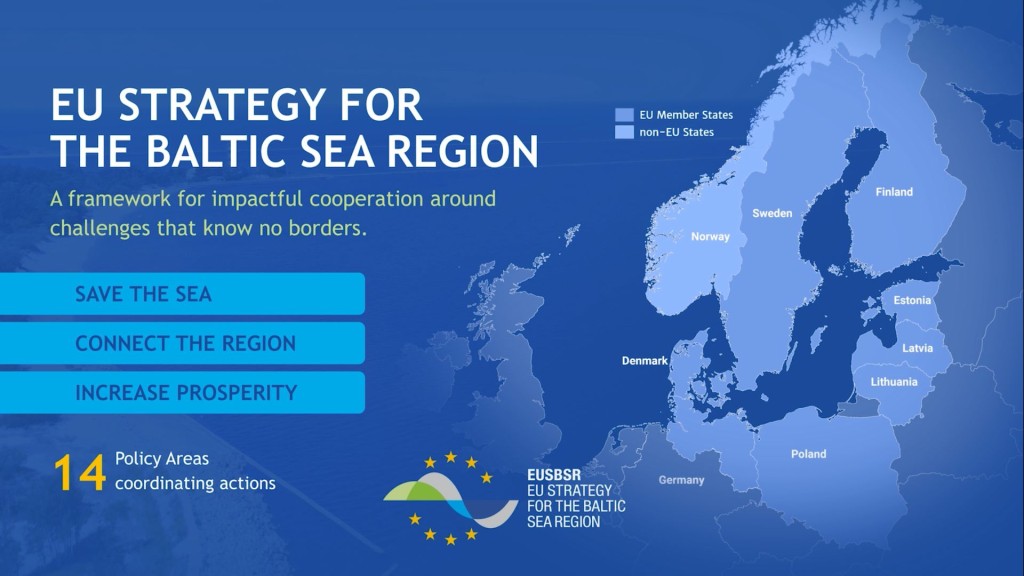
At the Forum’s Networking Village, Interreg programmes will host a shared stand where visitors can learn how Interreg-funded projects address key resilience challenges faced by the region. These include issues related to security, climate adaptation, demographic change and governance. The Forum’s overall theme this year is resilience, reflecting the growing importance of coordinated responses to shared regional challenges.

Interreg programmes at the joint stand
During the EUSBSR Annual Forum 2026 (11–13 May), Interreg programmes active across the Baltic Sea region can be found together at the Interreg joint stand in the Networking Village. The joint presence highlights how different programmes contribute to building a more resilient Baltic Sea region through cross-border and transnational cooperation.
The following Interreg programmes will be represented at the joint stand:
- Interreg Aurora
- Central Baltic Programme
- Interreg Estonia-Latvia Programme
- Interreg Latvia-Lithuania Programme
- Interreg Lithuania-Poland Programme
- Interreg South Baltic
- Interreg Deutschland-Danmark
- Interreg Baltic Sea Region
- Interreg Northern Periphery and Arctic Programme
Visitors are welcome to stop by the stand throughout the Forum to learn more about concrete project results, exchange experiences, and discuss how Interreg cooperation supports resilience in areas such as security, climate adaptation, demographic change and governance.
If you are looking to meet and talk to a specific Interreg Programme representative, here is a more detailed schedule who is at the stand when:


In addition to the joint stand, Interact and the Interreg Baltic Sea Region programmes will organise a breakout session titled “Co-creating a more secure and resilient Baltic Sea region with Interreg.” During this session, project representatives and coordinators from EUSBSR Policy Areas will present their work and engage participants in discussions on how project results can be reused, scaled up and linked more closely to policy development.
The session will also explore how Interreg project outcomes can support the implementation of the EUSBSR Action Plan and contribute to future territorial cooperation. By bringing project-level results into the wider macro-regional discussion, Interreg aims to demonstrate its long-standing role in delivering practical solutions to shared challenges in the Baltic Sea region.

